Lesson 1.2: What is financial analysis?
What is financial analysis?
If the “Why” establishes the purpose, the “What” defines the machinery.
Financial Analysis is the systematic process of evaluating businesses, projects, budgets, and other finance-related entities to determine their performance, value, and suitability.
At its simplest, it is a diagnostic framework. Think of a company as a patient. The financial statements (Income Statement, Balance Sheet, Cash Flow Statement) are the patient’s medical charts, filled with raw data like heart rate, blood pressure, and lab results. A financial analyst is the doctor who:
- Collects the data (the financial statements)
- Processes it using various tools and techniques (ratios, trends, benchmarks)
- Interprets the results to make a diagnosis (Is the company healthy? Is it growing? Is it at risk?)
- Prescribes a course of action or makes a recommendation (Invest, Lend, Improve operations)
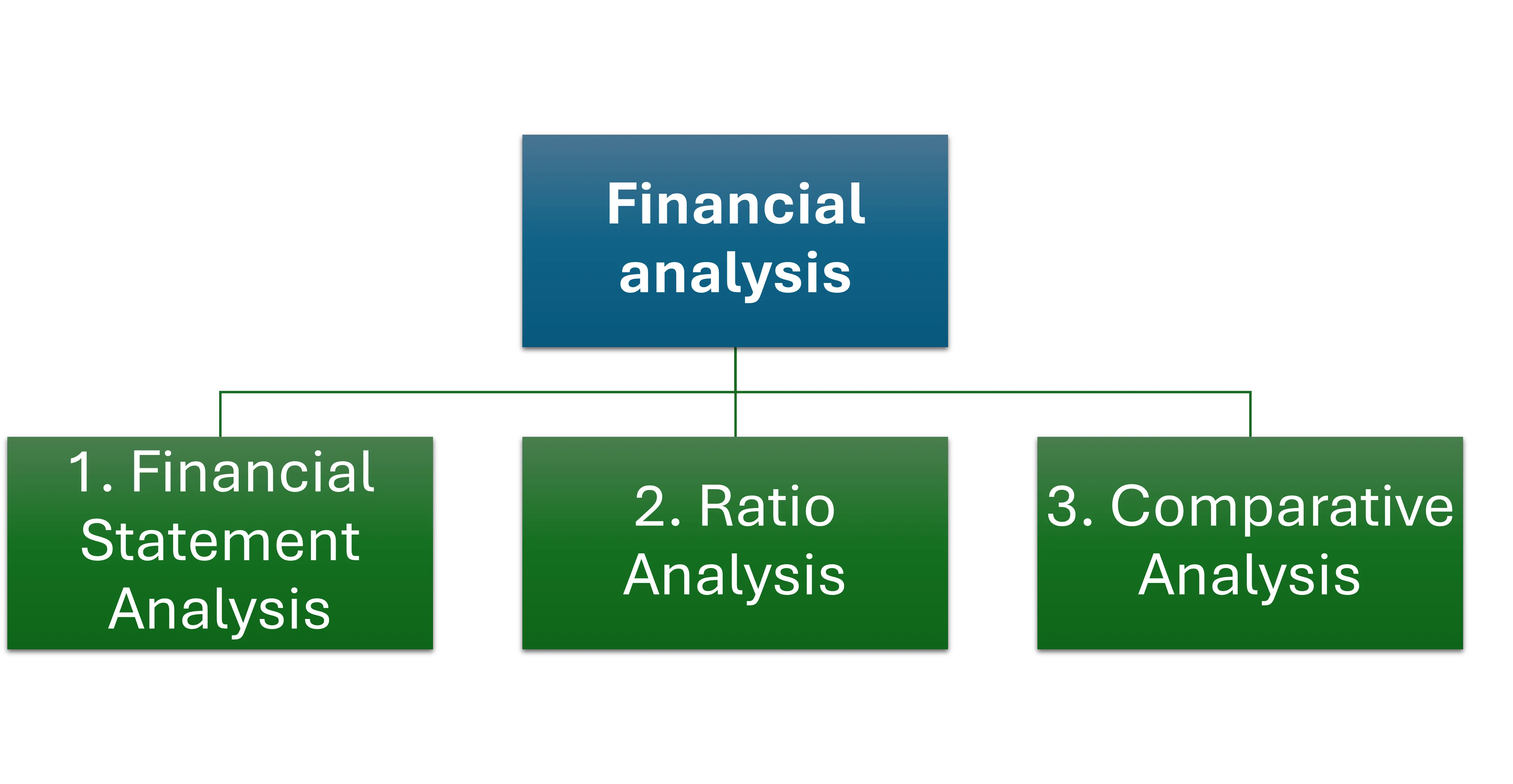
Components
-
Financial Statement Analysis
This is the foundation. It involves a deep dive into the three primary statements:
- Income Statement Analysis: Focuses on profitability
- Balance Sheet Analysis: Focuses on financial position at a point in time
- Cash Flow Statement Analysis: Focuses on liquidity and viability
-
Ratio Analysis
This is the toolkit that transforms raw numbers into comparable, meaningful metrics. By creating relationships between different line items from the financial statements, ratios allow for powerful insights.
-
Comparative Analysis
Numbers in isolation have limited meaning. Their true power is unlocked through comparison:
- Trend Analysis: Comparing the company’s performance against its own past. Is it improving, deteriorating, or stable?
- Benchmarking: Comparing the company’s ratios and metrics against its main competitors or industry averages. How does it stack up in the marketplace?
In brief
- Financial Analysis provides a way to convert numbers from reports into something meaningful
- Financial Analysis consists of:
- Financial Statement Analysis
- Ratio Analysis
- Comparative Analysis